Contact Mind Body Centers today for a FREE CONSULTATION by clicking here or calling 1-855-481-9605.
Ketamine Therapy and The Power of Beliefs
Shawn Achor’s seven Core Power Beliefs align with ketamine therapy and integration coaching with Yeshua Adonai by helping patients strengthen agency, gratitude, connection, meaning, and hope within a professionally supported path toward mental wellness.
Ketamine Therapy and The Power of Beliefs
Ketamine therapy may help people step outside entrenched patterns of depression, anxiety, and hopelessness. Combined with thoughtful integration coaching, treatment can create an opportunity to strengthen beliefs related to agency, gratitude, connection, purpose, and personal worth.
The beliefs we carry influence how we interpret our experiences, respond to challenges, and imagine the future. When someone has struggled with depression, anxiety, post-traumatic stress, or chronic emotional pain, discouraging beliefs can begin to feel permanent:
“Nothing I do matters.”
“I am alone.”
“I have nothing left to give.”
“My life will always feel this way.”
These thoughts are not signs of weakness. They can become deeply embedded through years of stress, trauma, disappointment, or mental health symptoms. Even when a person intellectually understands that change is possible, it may be difficult to feel that possibility emotionally.
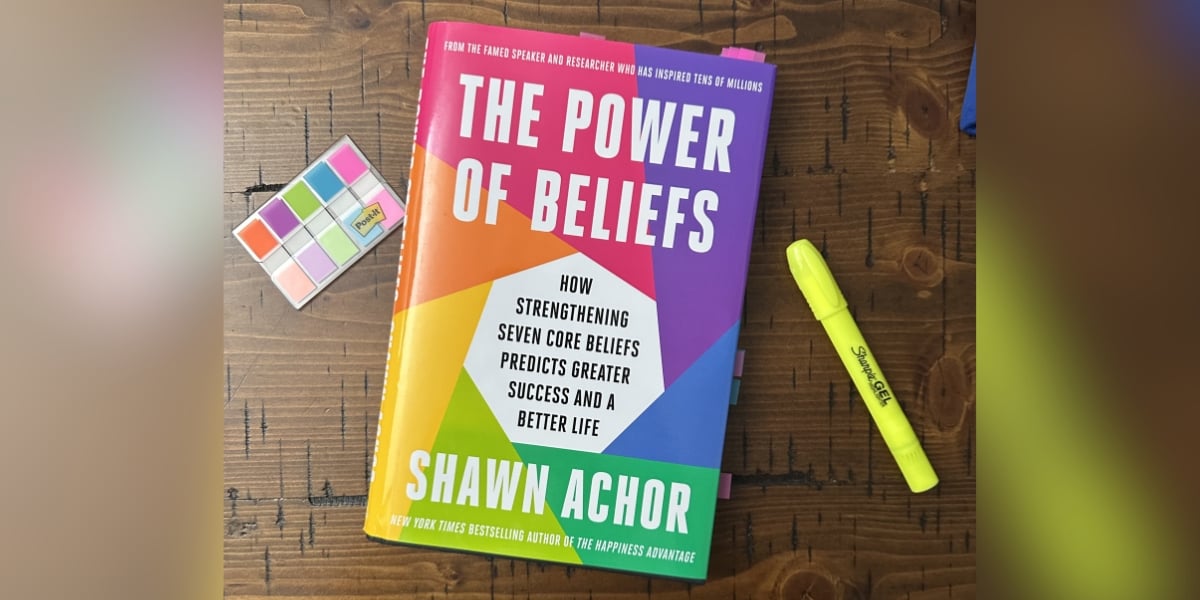
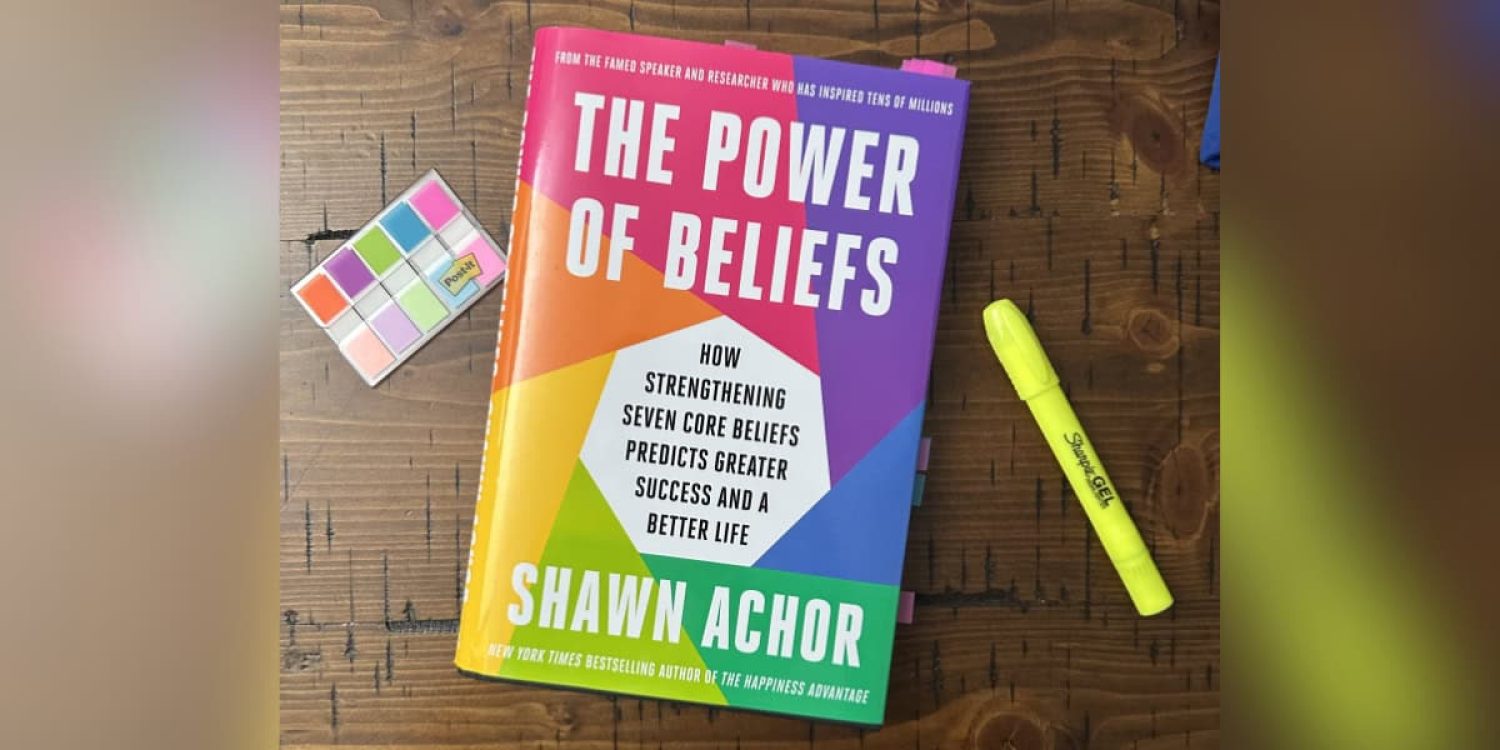
In his book The Power of Beliefs, positive psychology researcher Shawn Achor explores how beliefs can shape our present experiences and influence our future. His seven Core Power Beliefs provide an especially meaningful framework for understanding the potential relationship between ketamine infusion therapy, hope, and personal transformation:
- My Behavior Matters.
- I Am Grateful.
- I Matter.
- I Have Something to Give.
- I Am Not Alone.
- This Work Is Meaningful.
- There Is Something Greater Than Me.
For patients who struggle to internalize these beliefs, ketamine treatments may help create an important opening. Integration coaching can then help patients explore that opening, set intentions, and turn meaningful insights into practical changes.
How Ketamine Therapy May Help Beliefs Change
Ketamine infusion therapy works differently from conventional antidepressants. It acts on the brain’s glutamate system and has been shown to have positive effects on neuroplasticity which is the brain’s capacity to form, strengthen, and reorganize neural connections.
Yale Medicine notes that ketamine can produce rapid reductions in depressive symptoms for many patients even those with treatment-resistant depression. In a landmark randomized controlled study, participants receiving ketamine experienced significant improvement compared with placebo within approximately two hours. A more recent systematic review and meta-analysis of clinical studies also found that intravenous ketamine was effective in reducing depressive symptoms compared with control treatments.
For someone caught in repetitive negative thoughts, this potential for greater flexibility can be significant. Ketamine doesn’t simply insert positive beliefs into the mind. Instead, treatment may help a patient break free from the grip of their unhealthy mental patterns, allowing the patient to experience themselves, their circumstances, and their future from a different, more positive perspective.
Some patients have described how they feel after a treatment as being able to see positive possibilities that were previously blocked from their perception due to their depression, anxiety, or PTSD. Other patients have described their experience as the fog being lifted and being able to think more clearly.
A belief that once felt absolute like “I will never feel better” may begin to feel less like a certainty and more like a decision they now have the power to accept or reject. In that space, another possibility can emerge:
“Change is possible. Things can get better. I can feel better.”
That possibility can become the starting point for deeper healing.
The Seven Core Power Beliefs and Ketamine Treatments
Shawn Achor’s central argument is that beliefs do more than describe how we see the world. They help determine what we notice, how we interpret events, which actions we take, and what we expect to happen next.
Two people can experience similar circumstances but respond very differently because their underlying beliefs direct their attention and behavior in different ways. Achor describes the seven Core Power Beliefs as especially influential because they support agency, gratitude, self-worth, contribution, connection, meaning, and purpose.
For someone experiencing depression, anxiety, trauma, or prolonged emotional distress, these beliefs may be difficult to access. Ketamine infusion therapy may help loosen rigid patterns of thought and create room for a different perspective. Integration coaching with Yeshua Adonai can then help patients intentionally explore, practice, and strengthen these beliefs after a ketamine treatment.
1. My Behavior Matters
“My Behavior Matters” is the belief that our choices and actions can influence what happens next.
Achor presents this belief as foundational because people are less likely to act when they assume their efforts will make no difference. When someone believes their behavior matters, they are more likely to recognize opportunities, attempt change, persist through setbacks, and participate in creating a better outcome.
The absence of this belief can feel like helplessness. Depression may reinforce thoughts such as, “Why try?” or “Nothing I do changes anything.” Even healthy actions can begin to seem pointless when a person no longer expects them to produce a meaningful result.
Ketamine treatment may help interrupt this sense of being permanently stuck. A patient may gain enough distance from an entrenched thought pattern to consider that the future is not completely predetermined.
Integration coaching can help turn that opening into purposeful action. A patient might choose one attainable behavior like calling a loved one, returning to therapy, taking a walk, creating a sleep routine, or setting a healthy boundary. Each completed action can provide new evidence for the belief: What I do can affect what happens next.
2. I Am Grateful
“I Am Grateful” reflects the ability to recognize value in the present rather than allowing pain, fear, or disappointment to occupy the entire field of attention.
Achor’s work has long emphasized that the brain does not passively record every part of reality equally. It filters experience. What people repeatedly look for can influence what they become more likely to notice.
This is why gratitude matters. Gratitude does not deny suffering or insist that someone should feel happy about painful circumstances. Instead, it expands awareness. A person can acknowledge that life is difficult while also recognizing support, beauty, progress, love, or possibility.
Depression can make positive experiences feel distant or insignificant. After a ketamine infusion, some patients may find that they can perceive their lives from a less constricted viewpoint. They may reconnect with appreciation for a relationship, an opportunity, their own perseverance, or the fact that help remains available.
During integration coaching, patients can explore what felt valuable during or after treatment. A simple gratitude practice can help reinforce this expanded awareness—not as forced positivity, but as a way of teaching the mind that pain is not the only meaningful part of the present.
3. I Matter
“I Matter” is the belief that a person has inherent significance and that their presence affects the people and world around them.
This belief matters because self-worth influences behavior. When people believe they matter, they may be more willing to care for themselves, express their needs, accept support, establish boundaries, and pursue opportunities. When they believe they do not matter, they may withdraw, remain silent, neglect their health, or assume that seeking help would burden others.
Depression, trauma, and chronic emotional pain can deeply distort a person’s sense of worth. Someone may intellectually know that they are loved while still being unable to feel valuable.
Ketamine treatment may help create emotional distance from harsh self-judgments. Some patients may become able to view themselves with greater compassion or recognize that their symptoms are not the totality of who they are.
Integration coaching can help patients ask what believing “I Matter” would look like in practice. It may mean accepting care without guilt, communicating honestly, protecting time for recovery, or making choices that honor their physical and emotional well-being.
Seeking treatment is itself an expression of this belief: My life and future are worth caring for.
4. I Have Something to Give
“I Have Something to Give” moves beyond the belief that a person merely matters. It affirms that they possess qualities, experiences, strengths, or forms of care that can benefit others.
Achor considers contribution important because well-being is not built only through personal achievement or receiving support. People also gain meaning through giving, helping, creating, encouraging, teaching, serving, and participating in relationships.
Mental health symptoms can obscure this belief. A person who is struggling may see themselves primarily through the lens of what they cannot currently do. They may forget the compassion, humor, insight, creativity, wisdom, or love they still carry.
Ketamine treatment may help patients reconnect with parts of their identity that have been overshadowed by depression or trauma. Rather than seeing themselves only as someone who needs help, they may begin remembering that they are also someone with something valuable to offer.
Integration coaching can help patients identify those strengths without creating pressure to overextend themselves. Contribution may begin gently: sending an encouraging message, sharing an honest conversation, creating something meaningful, or being present for someone they love.
The belief becomes: My struggle does not erase my capacity to contribute.
5. I Am Not Alone
“I Am Not Alone” reflects the belief that support, connection, and shared humanity remain available.
Achor’s broader work emphasizes that social connection is not simply a pleasant addition to success and well-being. It is a major source of resilience. People are often better able to navigate stress and uncertainty when they believe they are supported and do not have to carry every challenge independently.
Depression and trauma can make this belief especially difficult to internalize. A person may feel isolated even when others are physically present. They may withdraw because they feel ashamed, misunderstood, exhausted, or afraid of becoming a burden.
Receiving ketamine treatment in a supportive clinical setting can challenge the assumption that suffering must be handled alone. At Mind Body Centers, patients are accompanied through the treatment process by a professional care team.
Integration coaching with Yeshua Adonai can further help patients examine where connection is available and where it might need to be rebuilt. Patients may identify trusted people, communicate their needs more openly, or recognize that asking for support is not a failure of independence.
“I Am Not Alone” does not mean that other people can remove every difficulty. It means that healing can take place within relationships rather than in isolation.
6. This Work Is Meaningful
“This Work Is Meaningful” is the belief that effort has value because it serves a worthwhile purpose.
Achor’s framework suggests that people engage differently with difficult work when they understand why it matters. The same task can feel draining and pointless or challenging and worthwhile depending on the meaning attached to it.
Healing often involves work that does not produce immediate or perfectly linear results. It may include attending appointments, revisiting painful experiences, changing routines, practicing coping skills, repairing relationships, or continuing after a discouraging day.
Without meaning, these efforts can feel like an exhausting list of obligations. With meaning, they become part of reclaiming a life.
Ketamine therapy may help a patient see recovery from a broader perspective. Integration coaching can then help connect new insights to personally meaningful intentions. Instead of simply trying to “feel less depressed,” a patient may be working toward being more present with family, returning to a valued activity, rebuilding confidence, or living more consistently with deeply held values.
The work matters because the person’s life, relationships, and future matter.
7. There Is Something Greater Than Me
“There Is Something Greater Than Me” is the belief that life belongs to a larger context beyond immediate personal concerns or present suffering.
Achor’s wording leaves room for this belief to be understood in different ways. For some people, it may refer to God, faith, or a spiritual reality. For others, it may involve love, family, nature, community, service, humanity, or a purpose that extends beyond the individual self.
This belief matters because emotional pain can make life feel very small. Attention may become confined to symptoms, fear, regret, or daily survival. Connection to something greater can restore perspective and remind a person that the current moment is part of a larger story.
Ketamine experiences may sometimes bring forward feelings of connection, awe, perspective, or renewed spiritual curiosity. These experiences do not need to be interpreted in one prescribed way.
Integration coaching with Yeshua Adonai can provide space to reflect on what felt meaningful and how it relates to the patient’s own beliefs and values. A patient may explore whether the experience renewed their faith, strengthened their connection to loved ones, clarified a sense of purpose, or reminded them that their life is larger than their diagnosis.
This final belief can offer profound hope: What I am experiencing now is real, but it is not the whole of who I am or what my life can become.
Ketamine Integration Coaching With Yeshua Adonai
A ketamine infusion may create an opening, but integration helps patients decide what to build within that opening.
Yeshua Adonai partners with Mind Body Centers as an integration coach, offering support around ketamine treatments. Integration coaching can help a patient reflect on emotions, images, memories, insights, or new perspectives that arose. The purpose is not to impose an interpretation. It is to help the patient recognize what feels constructive and translate it into grounded action.
Using Achor’s seven beliefs as a potential framework, a patient might ask:
- What action would demonstrate that my behavior matters?
- What am I able to appreciate today?
- How would I live differently if I fully believed I mattered?
- What gifts or strengths am I ready to share?
- Who can remind me that I am not alone?
- What meaningful work is healing asking me to do?
- What connects me to something greater than my current struggle?
These questions can help transform a powerful treatment experience into an intentional path forward.
Ketamine Therapy in Gilbert and Burnsville
Mind Body Centers provides ketamine infusion therapy in Gilbert, Arizona, serving patients from Mesa, Chandler, Tempe, Scottsdale, Phoenix, and communities throughout the East Valley.
People searching for ketamine therapy near Mesa, ketamine treatments near Chandler, or ketamine infusions in the Phoenix area can receive personalized care in a comfortable clinical environment at the Gilbert location.
Mind Body Centers also provides ketamine treatment in Burnsville, Minnesota, conveniently serving patients from Eagan, Apple Valley, Savage, Bloomington, and surrounding Minneapolis–Saint Paul communities.
For patients exploring ketamine treatments near Eagan, ketamine therapy near Apple Valley, or IV ketamine infusions near Bloomington, the Burnsville clinic offers an accessible local option with individualized support.
Begin With One Powerful Belief
You do not need to fully believe all seven statements before pursuing treatment. In fact, struggling to internalize them may be one reason to explore a new approach.
Ketamine infusion therapy may help create the mental and emotional space needed to see beyond beliefs shaped by depression, anxiety, trauma, or prolonged pain. Integration coaching can help you intentionally strengthen new perspectives and carry them into your relationships, routines, and future.
The process can begin with one belief:
My behavior matters.
Choosing to ask for help matters. Exploring a new treatment matters. Taking one step toward hope matters.
Contact Mind Body Centers today or call 855-481-9605 to schedule a free consultation and learn whether ketamine infusion therapy may be right for you.
Schedule Your Free Consultation Today
Contact Mind Body Centers today to learn more about ketamine therapy and whether it’s right for you.
- Gilbert, AZ: Click here or call 480-626-7828
- Burnsville, MN: Click here or call 952-213-2800
Or visit our website to schedule a FREE Consultation and take the first step toward healing.
—————————
Follow us on social media!
Instagram: https://instagram.com/mindbodycenters
Facebook: https://www.facebook.com/mindbodycenter
X / Twitter: https://x.com/mindbodycenters
LinkedIn: https://www.linkedin.com/company/mind-body-centers
Youtube: https://youtube.com/@mindbodycenters